Looking for a Florida rental market that feels more stable than speculative? Palm Coast stands out for long-term landlords because it combines strong population growth, a large base of owner-occupied housing, and a lifestyle that attracts people who want to stay. If you are weighing your next buy-and-hold move, this guide will help you understand where Palm Coast may fit, what rents look like, and which costs can shape your real returns. Let’s dive in.
Why Palm Coast draws landlords
Palm Coast had an estimated population of 109,886 in July 2025, which was up 23.2% from its April 2020 base. That kind of growth matters if you are looking for a market with ongoing housing demand rather than a short-lived spike.
The city also shows an 81.9% owner-occupied housing rate, a median household income of $77,350, and a median gross rent of $1,782. Taken together, those figures point to a market with a strong ownership culture but still meaningful rental demand for households who are relocating, downsizing, or renting by choice.
Palm Coast also offers the kind of day-to-day livability that can support longer stays. The city highlights 70 miles of saltwater and freshwater canals, the Intracoastal Waterway, access to Atlantic beaches, and more than 130 miles of trails and paths, along with parks, golf, and recreation assets.
Palm Coast price and rent snapshot
If you are analyzing a potential purchase, Realtor.com places Palm Coast’s median listing price at $399,990. That gives you a useful starting point when comparing acquisition cost to likely monthly rent.
Rental data varies by platform, so it helps to treat each number as directional rather than exact. Zillow lists Palm Coast average rent at $1,939 across all bedroom counts and property types, while Realtor.com shows a median monthly rent of $2,100.
For apartment inventory, Apartments.com reports average rents of about $1,472 for one-bedroom units and $1,626 for two-bedroom units. That spread matters because Palm Coast is not just one rental product type. Your expected income will depend heavily on whether you buy a house, condo, townhome, or apartment-style unit.
Best property types for long-term rentals
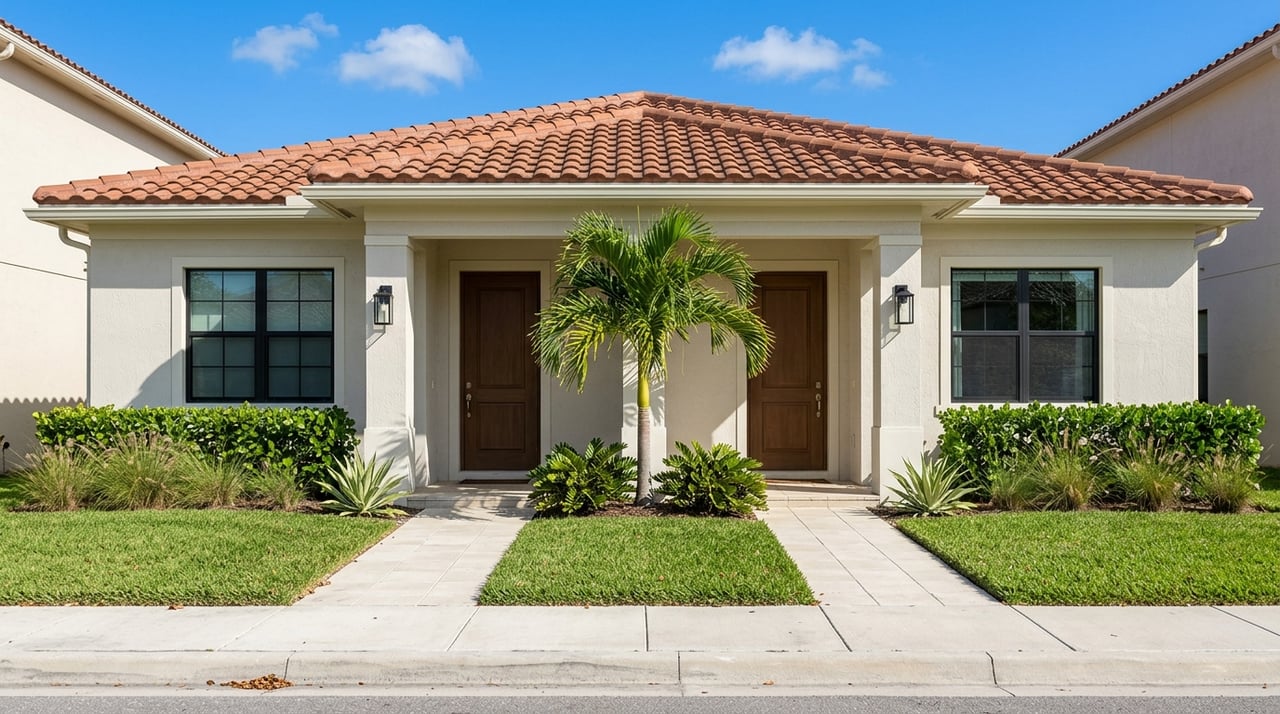
Palm Coast’s rental inventory includes houses, apartments, condos, townhomes, and duplexes. For many long-term landlords, the clearest fit is often a single-family home or attached home in a subdivision, especially if your goal is broad tenant appeal and straightforward leasing.
That does not mean condos or townhomes cannot work. They may appeal to owners who want a lower-maintenance setup or a lower entry point, but your underwriting should still account for any added ownership costs tied to the property or community.
In practical terms, Palm Coast is not a one-size-fits-all apartment market. The best asset choice depends on your budget, your desired rent band, and how much operational complexity you are willing to manage.
Rent bands by area
One of the most useful ways to study Palm Coast is by looking at neighborhood-level rent ranges. In more attainable inland areas, Realtor.com shows Pine Grove–Belle Terre at $1,827 per month, Lehigh Woods at $1,825, Indian Trails at $1,900, and Pine Lakes at $1,900.
These areas can be useful reference points for standard long-term single-family rentals. For many investors, this is where the buy-and-hold math may feel the most familiar and repeatable.
Higher-priced neighborhood bands show a different side of the market. Realtor.com lists Palm Harbor at $2,437 per month, Cypress Knoll at $2,045, Quail Hollow at $2,100, Grand Haven at $2,975, and Country Club Cove at $3,300.
Those numbers suggest that water access, golf, and community amenities can support stronger rents. They can also come with a narrower renter pool, so it is smart to balance upside with realistic vacancy and leasing assumptions.
Luxury and thin-inventory segments
At the top end of the Palm Coast market, inventory appears thinner and less uniform. Realtor.com shows no current median rent for Ocean Hammock, Palm Coast Plantation, and Hammock Dunes, while Marineland Acres is listed at $8,654 per month.
For a landlord, that does not automatically mean these areas are bad opportunities. It means you should expect a more selective leasing process and less dependable comp data when you set pricing.
Luxury coastal segments can produce eye-catching rents, but they often require more conservative underwriting. If your tenant pool is smaller, even a strong monthly rent target may not fully offset longer lease-up timelines or higher carrying costs.
How Palm Coast compares with Florida
On Zillow’s dataset, Palm Coast’s average rent of $1,939 sits below Florida’s overall average of $2,395. That means Palm Coast may screen as a lower-cost rental market than the state average, even though some neighborhoods rise far above the citywide baseline.
This can be helpful if you are trying to position a property for stable demand rather than chasing the highest possible headline rent. In many cases, consistency matters more than peak pricing.
Costs that shape your real return
Headline rent is only part of the investment story in Palm Coast. Taxes, insurance, maintenance, and any parcel-specific assessments can all change your net return in a meaningful way.
Property taxes deserve close attention. The City of Palm Coast explains that a tax bill is based on assessed value, exemptions, and the tax rate, and its FY 2026 budget reduced the city general-fund millage from 4.1893 to 4.0893.
Flagler County’s 2025 tax-district sheet shows Palm Coast parcels at 18.17460 mills with mosquito control and 17.82460 mills without mosquito control, before any non-ad valorem assessments. Some Palm Coast parcels also carry added assessments tied to community development districts or redevelopment areas, so two similar-looking properties may not carry the same annual ownership cost.
That is why a simple purchase-price-to-rent ratio is not enough. You need to review the full cost structure on the specific property you are considering.
Insurance and maintenance planning
Insurance is another key line item for Palm Coast landlords. Citizens’ 2026 rate kit says statewide average personal-lines rates were down 2.6%, but it also notes that county-by-county estimates vary.
The practical takeaway is simple: do not assume your premium will stay fixed. Re-quote regularly and build room in your pro forma for changes over time.
Because Palm Coast is coastal and the city’s maps include flood zones, it also makes sense to budget conservatively for exterior upkeep, roof work, HVAC, landscaping, and storm-related reserves. These items may not show up in a rent comp, but they can have a major impact on actual performance.
Local infrastructure matters too
City budget priorities can offer useful context for long-term owners. Palm Coast’s FY 2026 budget includes $1 million for neighborhood street maintenance and $500,000 for saltwater canal dredging.
That does not replace property-level due diligence, but it does show that infrastructure and waterway upkeep remain active local priorities. For landlords, that is part of understanding the environment your property operates within over time.
Florida landlord rules to know
If you plan to self-manage or compare management options, Florida law is essential. Residential rentals in Florida are governed by Chapter 83, Part II of the Florida Statutes, including rules around security deposit handling, landlord maintenance obligations, and termination notices.
State law requires security deposits and advance rent to be held in a separate account or covered by bond. It also sets written notice rules for nonpayment and cure or termination.
For landlords, compliance is not a side issue. It is part of protecting income, reducing avoidable disputes, and running a durable rental business.
Where professional management helps
Palm Coast covers a wide range of rental situations, from inland subdivisions to waterfront and golf communities to parcels with different tax or assessment structures. That variety can make hands-on ownership more complex than it first appears.
Professional management can help support leasing, tenant screening, rent collection, maintenance coordination, legal compliance, lease enforcement, and owner reporting. For small-to-mid-size investors, those systems often matter most during the ordinary moments of ownership, like a repair request, a late payment, a lease renewal, or a turnover.
If you are comparing management support, focus on practical questions such as:
- How quickly can the property be re-leased?
- How is tenant screening handled?
- How are repairs documented and tracked?
- How are deposits and required notices managed?
- How clear and consistent are owner statements?
For many landlords, the biggest value is not just convenience. It is having a repeatable process that helps protect returns over the long run.
A smart Palm Coast rental strategy
For many buy-and-hold investors, the strongest long-term rental thesis in Palm Coast centers on inland single-family homes and attached homes. Core neighborhood rents often cluster from the high $1,800s to around $2,100 per month, which can create a practical middle ground between affordability and demand.
If you want to target coastal, golf, or amenity-rich communities, higher rents may be available. Just make sure your underwriting accounts for thinner inventory, more selective tenant matching, and potentially higher carrying costs.
The big lesson in Palm Coast is that net performance depends on more than rent. The investors who do well here are usually the ones who evaluate location, property type, taxes, insurance, maintenance exposure, and compliance systems together.
If you want a clearer picture of what a Palm Coast rental could earn and how the numbers may pencil out for your goals, Evolve Property Group can help with rental analysis, leasing, and full-service long-term property management.
FAQs
What is the typical rent range for long-term rentals in Palm Coast?
- Directional citywide figures range from about $1,939 average rent on Zillow to a $2,100 median monthly rent on Realtor.com, with many inland neighborhood rents clustering in the high $1,800s to low $2,000s.
Which Palm Coast property types often work best for long-term landlords?
- Single-family homes and attached homes often offer the clearest fit for long-term rentals in Palm Coast, while condos and townhomes may work for lower-maintenance or entry-level strategies.
Are Palm Coast luxury rentals a good investment for long-term owners?
- They can be, but luxury and coastal segments tend to have thinner inventory and less consistent rent data, so they usually require more conservative underwriting.
What ownership costs should Palm Coast rental investors watch most closely?
- Pay close attention to property taxes, insurance, non-ad valorem assessments, maintenance reserves, and storm-related upkeep costs.
What Florida laws matter for Palm Coast landlords?
- Florida Chapter 83, Part II covers core residential rental rules, including security deposit handling, landlord maintenance obligations, and required notices for nonpayment or termination.
When should a Palm Coast landlord consider professional property management?
- Professional management can be especially useful if you want help with leasing, screening, rent collection, maintenance coordination, compliance, and clear owner reporting across different Palm Coast property types and neighborhoods.