Can you really live in Downtown Orlando without a car? If you work or play in 32801, the answer can be yes, with a bit of planning. You get walkable blocks, quick local transit, and plenty of dining and entertainment close by. In this guide, you’ll learn how to get around, handle daily errands, plan for weather, and budget smartly so car-free living fits your routine. Let’s dive in.
What car-free looks like in 32801
Downtown Orlando is compact, with many cafés, fitness studios, and restaurants clustered within short walks. You can often handle everyday needs with trips of a mile or less. The tradeoff is that larger shopping, some medical centers, and certain job hubs sit outside the core. Those trips may require a bus, rail connection, or rideshare.
If you focus your home search around Lake Eola, Church Street, or Thornton Park, you reduce daily travel time. Think in terms of short, frequent trips. For occasional bigger errands, plan ahead and use the transit and rideshare tools below.
Getting around without a car
Walkability basics
The street grid downtown makes walking straightforward for errands, dining, and entertainment. Crosswalks and active sidewalks create a comfortable short-trip pattern for many residents. You’ll still want a good bag, water bottle, and rain layer for hot afternoons and summer storms.
LYMMO downtown circulator
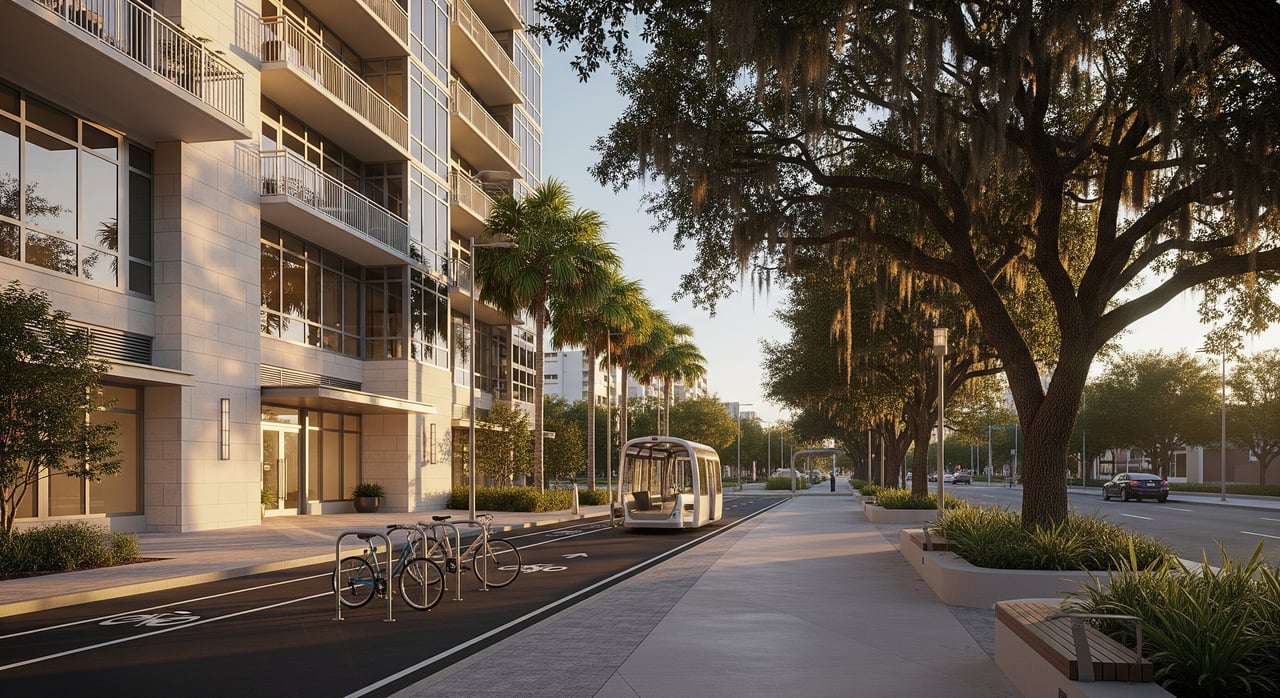
LYMMO is the city’s high-frequency downtown circulator that helps you hop between core neighborhoods and key stops. It fills the gap when a walk is a bit too far or the weather turns. For route maps, service hours, and stop locations, check the City of Orlando’s mobility resources on the City of Orlando website.
LYNX bus network
LYNX runs regional bus service across Orlando and Orange County, with several routes serving the downtown hub. It is useful for reaching shopping districts, hospitals, and employment centers outside 32801. Review current routes, fares, and real-time tools on the official LYNX site before planning commutes or weekend errands.
SunRail for regional trips
SunRail connects downtown to a string of stations across neighboring counties, which can be helpful if your job sits near a rail stop. Service is commuter-focused, so pay attention to operating days and peak times. Look up stations, timetables, and alerts on SunRail’s official site to confirm your schedule.
Bikes and scooters
Dockless scooters and bikes often cover downtown and work well for short trips. Bike lanes and nearby trails improve access, though protected lanes are limited in some corridors. In summer, ride earlier in the day, use a helmet, and carry water. During storm season, expect service pauses and plan an alternate route.
Rideshare and rentals
Uber and Lyft are widely available and can be a smart late-night or backup option when transit frequency drops. For bulk shopping or weekend outings, a short car rental can be more cost-efficient than multiple rides. Carshare options may appear or change over time, so a flexible mindset helps.
Airport and intercity trips
For business travel or weekend getaways, you can reach Orlando International Airport with bus connections or rideshare. Map travel time to your terminal and pad for traffic. For airport services and ground transportation, start with the Orlando International Airport site.
Daily life and errands
Groceries and pharmacies
You can cover most weekly groceries with short walks, scooters, or a quick bus ride to nearby markets. For heavier stock-ups, plan one larger trip using rideshare or a rental. Pharmacies and urgent-care options exist downtown, while specialized care may require a bus or rail connection.
Commuting patterns
If you work in or near the core, car-free commuting is straightforward. For suburban office parks not near SunRail or frequent bus routes, calculate door-to-door time and transfers carefully. Use LYNX route planners and SunRail schedules to build a reliable routine, then test it during your actual work hours.
Dining and nightlife
You can walk to many restaurants, bars, venues, and cultural events. Late nights often mean lower transit frequency, so rideshare becomes the go-to. Set a small monthly rideshare budget for peace of mind after concerts or games.
Healthcare and schools
Downtown clinics and urgent care are accessible, with major hospitals and specialists located outside the core. Families should map school drop-offs and extracurriculars in real time to judge fit. If morning timing is tight, a hybrid strategy with occasional rideshare may help.
Weather and safety tips
Heat, storms, and seasonality
Hot, humid summers shape daily habits. Plan longer walks for mornings or evenings, carry water, and wear breathable clothing. Afternoon thunderstorms are common, so keep a light rain shell and confirm that scooters or certain routes are still available. During hurricane season, follow city guidance and keep a personal emergency plan.
Night travel and bike safety
Downtown feels most comfortable when streets are active and well lit. If your route is quiet late at night, choose rideshare. On bikes and scooters, use lights, reflective gear, and routes with bike lanes when possible.
Budgeting for car-free living
Estimating monthly costs
A car-free budget redirects money from car payments, fuel, insurance, maintenance, and parking into:
- Transit passes and day fares
- Rideshare for late nights or low-frequency hours
- Scooter or bike fees and basic gear
- Occasional car rentals for bulk errands or trips
Build a simple spreadsheet that compares your estimated monthly transit and rideshare spend to your current car costs. Include a buffer for special events, weather days, or airport trips.
Parking savings and housing tradeoffs
Downtown parking can be costly and limited. If you can avoid a vehicle, you skip monthly parking fees and daily hassles. Housing near the core may command a premium, but it can pay off in time savings and lower transportation costs. Compare total monthly housing plus transportation across neighborhoods before you decide.
Sample errand week without a car
- Monday: Walk to a nearby market for fresh produce and staples.
- Wednesday: Bus or LYMMO to pick up a prescription and drop off dry cleaning.
- Friday: Walk to a dinner reservation and use rideshare home after a show.
- Saturday morning: Rent a car for two hours to stock up on bulk items. Add a stop at a home store en route.
- Sunday: Scooter to the park, then meet friends at a café within the core.
This routine keeps most trips short and light. The occasional timed rental or planned rideshare handles the heavy lifts.
Is car-free right for you?
Start with a trial. For one to two weeks, live as if you do not have a car. Buy a transit pass, map your commute, and schedule one bulk-errand window. Track time, cost, and comfort. If it works for your lifestyle and budget, you have your answer.
If you want help finding a home in 32801 that fits your car-free routine, reach out to Evolve Property Group for local guidance on location, access, and daily-life logistics.
FAQs
Is everything I need walkable in 32801?
- Many daily needs are within short walks or a quick LYMMO ride. Larger shopping and certain services may require a bus or rideshare.
Can I count on transit to get to work on time?
- For downtown jobs, yes. For suburban locations not near SunRail or frequent LYNX routes, plan extra time or use rideshare as a backup.
How reliable are LYNX and SunRail for commuters?
- Both are established services. LYNX reliability varies by route and time of day, while SunRail focuses on commuter hours. Check official timetables and alerts.
Will I feel stuck at night without a car?
- Downtown offers plenty of nightlife, but transit frequency drops late. Many residents budget for rideshare after evening events.
How do weather and hurricane season affect car-free life?
- Heat and afternoon storms can slow walking and biking. Keep rain gear and an alternate route. During hurricane season, follow city guidance and have a plan.
Are bikes and scooters practical year-round?
- They work well for short trips, especially in cooler hours. Use helmets, lights, and choose routes with bike lanes when possible.
How do I estimate the cost of going car-free?
- Compare your current car costs to a monthly mix of transit, rideshare, scooter or bike fees, and occasional rentals. Add a small buffer for special trips.